How to Choose a Genuine Watch Wholesaler: 12 Questions to Ask Before You Buy
November 11, 2026 · Updated November 18, 2026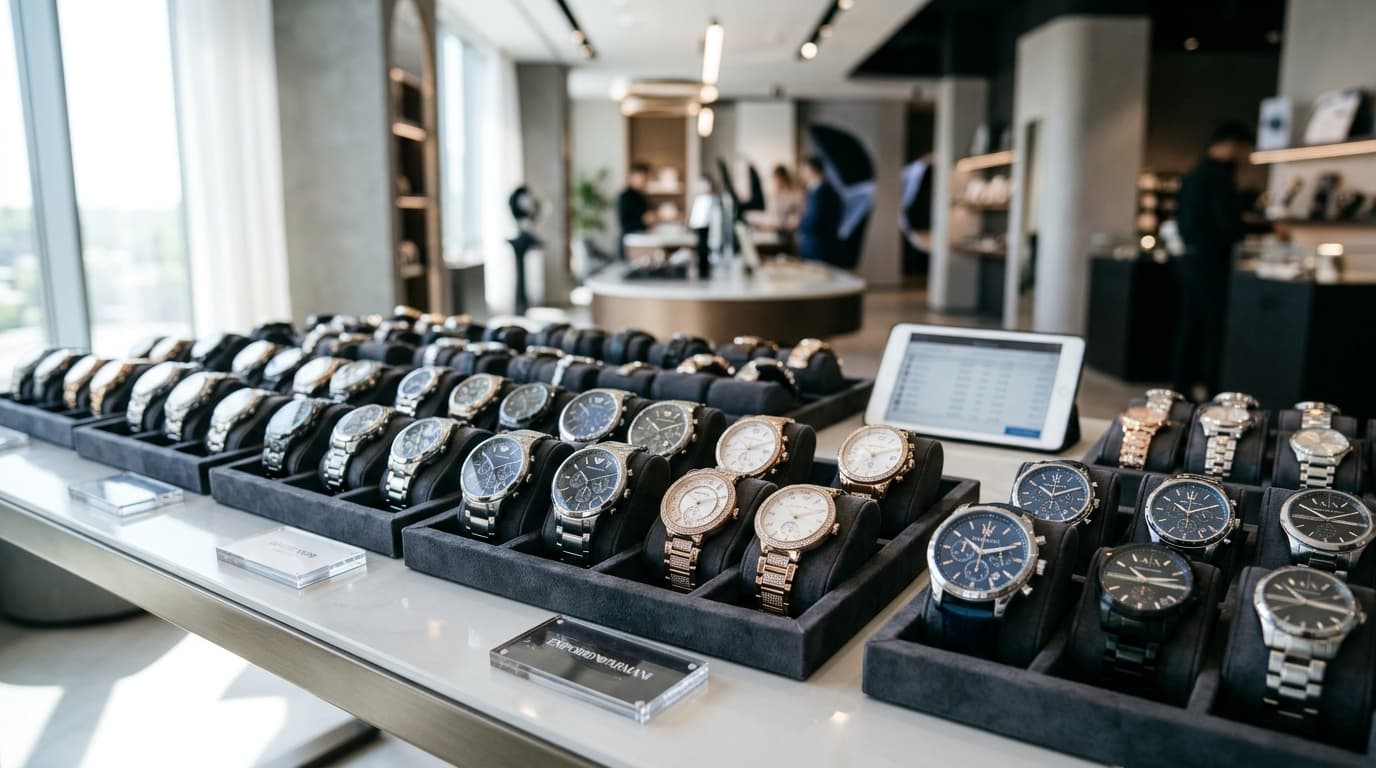
Finding a watch wholesaler is not simply a matter of comparing prices and choosing the supplier with the largest catalogue. For retailers, jewellery businesses and online watch sellers, the decision affects product authenticity, profit margins, customer confidence and the ability to resolve problems after a sale.
A supplier may advertise well-known watch brands, offer attractive wholesale prices and claim that every item is genuine. However, these statements do not necessarily establish where the watches come from, what condition they are in or whether the supplier can meet its commercial commitments.
Before placing an order, buyers should examine the supplier's business identity, product documentation, payment arrangements, delivery terms and after-sales procedures. It is also important to understand the difference between authorized dealers, grey-market suppliers and independent wholesalers.
The following 12 questions provide a practical way to assess a potential wholesale partner before making a financial commitment. Businesses considering different sourcing arrangements can also explore the branded watch wholesale services offered by Watches of Dubai.
Questions 1–4: Establish the Supplier's Identity and Product Authenticity
1. What legal business entity will invoice and receive payment for the order?
A professional wholesale transaction should involve an identifiable business rather than an individual or an unexplained payment account. Knowing the legal entity behind the transaction gives buyers a starting point for checking the supplier's business registration, commercial history and contractual responsibility.
It also helps prevent situations where the company advertising the watches is different from the company receiving the money.
A good answer: The supplier provides its registered business name, business address, registration details where applicable and corresponding invoice information. The beneficiary of the payment can be reasonably matched to the invoicing entity, or any legitimate third-party payment arrangement is clearly documented.
A bad answer: The supplier refuses to identify the business, provides inconsistent company details or asks for payment to an unrelated personal account without a convincing explanation.
2. What is the exact brand and full model reference of each watch?
Brand names alone are not enough to identify wholesale stock accurately. The same collection may contain numerous variations in case size, dial colour, movement, bracelet, materials and production specifications.
A complete model reference helps buyers confirm that the supplier is offering the intended product rather than a similar-looking alternative. It also makes it easier to compare wholesale quotations, verify product information and manage inventory.
A good answer: The supplier provides the brand, complete model or reference number, relevant product specifications and clear photographs where available. Any differences between the advertised product and the actual stock are disclosed before payment.
A bad answer: The supplier uses broad descriptions such as "original branded watch" or "genuine Swiss watch" without identifying the exact product. Refusal to provide a reference number or unexplained substitutions should be treated as a warning.
Buyers can also compare product references against the Watches of Dubai brand catalogue when researching available brands and collections.
3. Is the watch new, aged stock, pre-owned, refurbished or otherwise?
The condition of a watch has a direct effect on its resale value and the expectations of the final customer. Two watches with the same model reference may have very different commercial values depending on their condition, storage history and included accessories.
Buyers should establish whether the stock is current retail inventory, older unsold inventory, discontinued stock, pre-owned or refurbished. Terms such as new and unworn should also be clarified because they do not necessarily mean the watch is current production or supplied with complete original packaging.
A good answer: The supplier provides a clear condition description and discloses relevant details, including storage condition, signs of handling, previous ownership, refurbishment or missing accessories.
A bad answer: The supplier describes every item as brand new despite being unable or unwilling to explain its condition, or treats refurbished, pre-owned and unused stock as interchangeable categories.
4. What evidence of authenticity and product provenance can you provide?
This is one of the most important questions when buying branded watches in bulk. A supplier's verbal guarantee is not a substitute for reasonable evidence supporting the origin and authenticity of the products.
It is also important to understand the difference between an authorized dealer, a grey-market supplier and an independent wholesaler.
An authorized dealer has permission from the relevant brand or its official distribution network to sell its products under the applicable authorization arrangements.
A grey-market supplier sells genuine branded products outside the brand's officially authorized distribution network. Grey-market watches are not automatically counterfeit, but their sourcing, manufacturer warranty eligibility and after-sales arrangements may differ from authorized-channel purchases.
An independent wholesaler supplies watches to other businesses. Its wholesale status alone does not establish whether it is authorized by a brand or whether every product has been sourced through an authorized distribution channel.
A good answer: The supplier explains its sourcing arrangements and provides reasonable supporting evidence appropriate to the stock. Depending on the transaction, this may include supplier invoices, purchase records, available serial or reference information, warranty documentation and other traceable commercial records. Any limitations on documentation are explained.
A bad answer: The supplier relies entirely on statements such as "100% original," claims official authorization without evidence or refuses to explain the source of the stock.
Importantly, an original box, warranty card or certificate should not be treated as conclusive proof of authenticity on its own. Documentation requirements vary between brands, models and sourcing arrangements.
Buyers should check authorization claims directly with the relevant manufacturer. For example, Rolex's official store locator helps customers identify its official retail network. Similar verification should be conducted through the official websites of other brands.
Questions 5–8: Understand the Commercial Terms and Protect Your Payment
5. What minimum order quantity and volume-based pricing apply to each model?
Wholesale pricing is often dependent on order volume, product availability and the specific models selected. A supplier may advertise an attractive starting price that only applies to large orders or selected stock.
Understanding the minimum order quantity (MOQ) and pricing structure helps retailers calculate their actual purchasing costs before committing to inventory.
A good answer: The supplier provides a written price list showing individual model prices, applicable MOQs, quantity-based discounts, stock availability and any conditions attached to promotional pricing.
A bad answer: The supplier advertises exceptionally low prices but refuses to provide a clear quotation, changes prices without explanation or introduces undisclosed minimum quantities after negotiations have started.
Buyers should compare the total landed cost rather than focusing exclusively on the advertised wholesale price. This includes transportation, insurance, customs duties, import taxes and other applicable charges.
6. Which currency, payment method and invoice terms apply?
Payment arrangements should be agreed upon before an order is confirmed. International watch wholesale transactions may involve different currencies, bank transfers, payment processors and transaction fees.
Buyers should understand the payment schedule, deposit requirements, outstanding balance, applicable bank charges and the conditions under which payments are refundable.
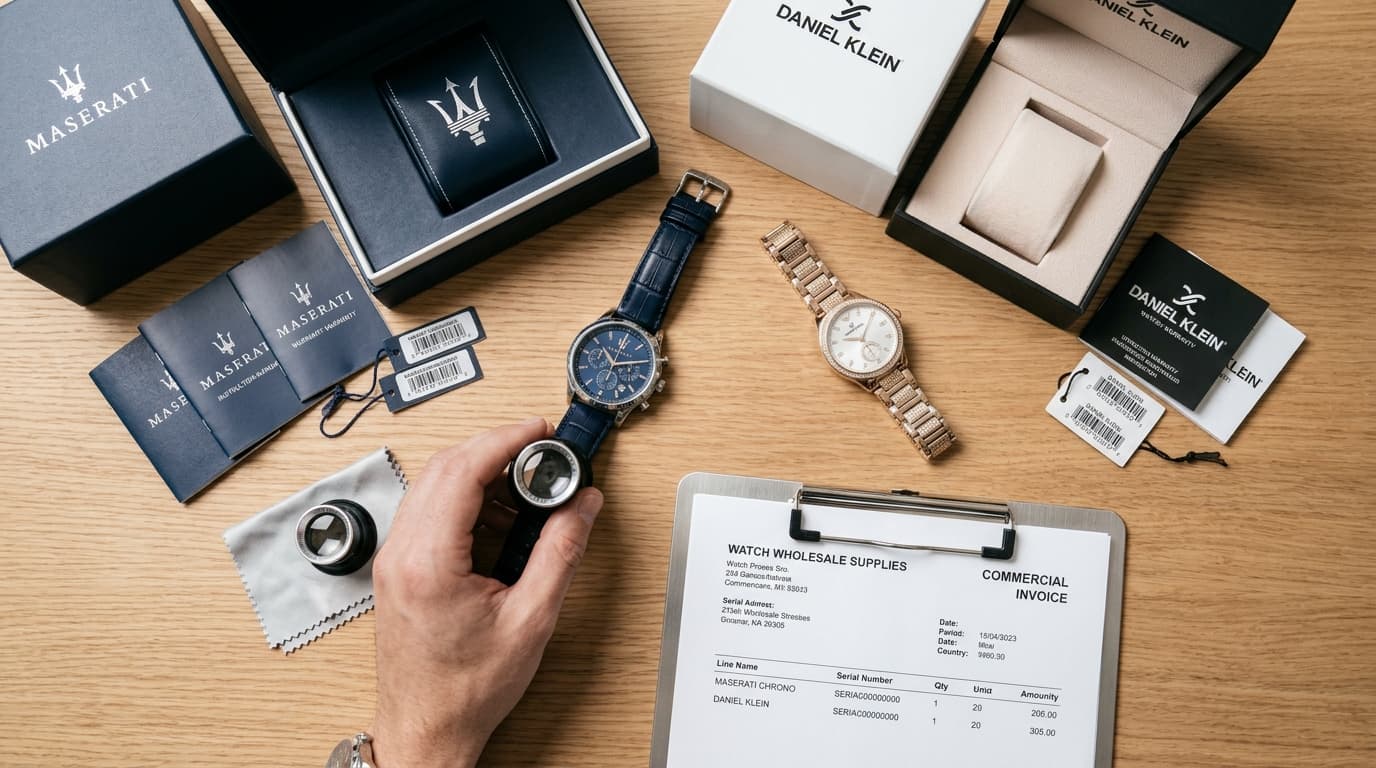
A proper commercial invoice should identify the parties involved and provide enough information to establish exactly what is being purchased.
At a minimum, buyers should look for:
- Seller's legal business name and address.
- Buyer's legal business name and billing details.
- Invoice number and issue date.
- Brand, model references, descriptions and quantities.
- Unit prices, currency and total order value.
- Applicable taxes, discounts and additional charges.
- Payment terms and payment instructions.
- Delivery terms or a reference to the agreed shipping arrangement.
For international shipments, additional customs information may be required, including country of origin and appropriate commodity classification details.
A good answer: The supplier issues a formal invoice before payment, confirms the agreed currency and payment schedule, and provides payment instructions consistent with the verified business relationship.
A bad answer: The supplier insists on payment without an invoice, refuses to document the transaction or repeatedly changes payment details through informal messages.
For larger orders, buyers should independently verify any change to bank account details through a previously established contact channel. Avoid rushing payments simply because a supplier claims that a special price or shipment opportunity will disappear.
7. Who is responsible for importing the watches, and which Incoterm governs delivery?
International watch purchases involve more than arranging a courier. Depending on the shipping arrangement, responsibility for export clearance, transportation, insurance, import customs procedures and applicable charges may be divided between the supplier and buyer.
The agreed Incoterm helps clarify these responsibilities. Common examples include:
- EXW (Ex Works): The buyer generally assumes responsibility for arranging collection and most transportation-related procedures from the agreed location.
- FOB (Free On Board): Used for sea or inland waterway transport, with delivery and risk transfer occurring when the goods are placed on board the nominated vessel.
- CIF (Cost, Insurance and Freight): Used for sea or inland waterway transport. The seller arranges and pays for carriage and specified insurance to the named destination port, although risk transfers when the goods are on board the vessel.
- DAP (Delivered at Place): The seller arranges transportation to the named destination, while the buyer generally handles import clearance and applicable import duties and taxes.
- DDP (Delivered Duty Paid): The seller generally assumes responsibility for delivery and import clearance, including applicable duties and taxes, subject to the agreed terms and practical arrangements.
The specific Incoterm should include a clearly identified place or port and the applicable version, such as Incoterms 2020.
A good answer: The supplier identifies the agreed Incoterm, explains who arranges shipping and insurance, confirms who acts as importer of record and clarifies which party handles customs clearance, duties and taxes.
A bad answer: The supplier promises that shipping is fully covered but cannot explain whether customs charges, import taxes or clearance fees are included.
Buyers should also check the import requirements of their destination country. Customs authorities may require a commercial invoice, packing list, transport document, country-of-origin information and an appropriate HS commodity code.
For watches, classification may depend on factors such as the movement and product construction. Buyers should not assume that every watch has the same customs classification or duty rate.
Before ordering internationally, consult the relevant customs authority or a licensed customs broker. A supplier's shipping quotation should not be mistaken for confirmation that every import obligation has been satisfied.
The International Chamber of Commerce's Incoterms 2020 guidance provides further information about the responsibilities of buyers and sellers in international trade. The World Customs Organization's Harmonized System resources are also useful when researching product classification.
8. What happens if the watches arrive damaged, defective or different from the order?
Even established suppliers can experience shipping problems, product defects or inventory discrepancies. What matters is whether there is a documented procedure for resolving these situations.
A retailer needs to know how quickly issues must be reported, what evidence is required and whether the supplier offers replacement, repair, credit or refund arrangements.
A good answer: The supplier has written procedures covering damaged shipments, incorrect models, missing quantities and defective products. It explains reporting deadlines, evidence requirements and available remedies before the order is placed.
A bad answer: The supplier refuses responsibility once the shipment leaves its premises, provides no written claims procedure or makes vague promises to resolve problems later.
Buyers should also check whether transport insurance is included and who is responsible for filing a claim with the carrier.
Questions 9–12: Protect Your Customers and Build a Reliable Supply Relationship
9. Which warranty applies, who provides it and what are its exclusions?
Warranty coverage is particularly important when selling branded watches because customers may reasonably expect support if a product develops a fault.
However, a genuine watch does not automatically come with a manufacturer-backed international warranty. Coverage can depend on the brand, country, purchase channel, warranty activation requirements and the terms applicable to the individual watch.
Buyers should distinguish between a manufacturer's warranty, a supplier warranty and a retailer's own customer warranty obligations.
A good answer: The supplier identifies the warranty provider, explains the applicable coverage period, provides available documentation and clarifies whether international servicing is available. Any exclusions or channel-related limitations are disclosed.
A bad answer: The supplier promises an international manufacturer warranty for every model without supporting documentation or refuses to explain who will handle warranty claims.
Retailers should never advertise manufacturer warranty coverage unless they have established that the particular products qualify for it.
10. How are missing accessories, packaging differences and model substitutions handled?
A watch order may include more than the watch itself. Original packaging, instruction manuals, additional bracelet links, tags, warranty documentation and other accessories can influence the final customer's purchasing experience.
These details should be agreed upon before an order is dispatched, particularly when buyers intend to sell the watches as complete retail packages.
A good answer: The supplier provides an itemized description of the included accessories and packaging. Any variations are disclosed and approved by the buyer before dispatch. Substitutions require prior written consent.
A bad answer: The supplier assumes that accessories are optional, replaces models without approval or describes incomplete sets as complete retail packages.
For higher-value orders, buyers should request photographs of representative stock and written confirmation of the contents of each product set.
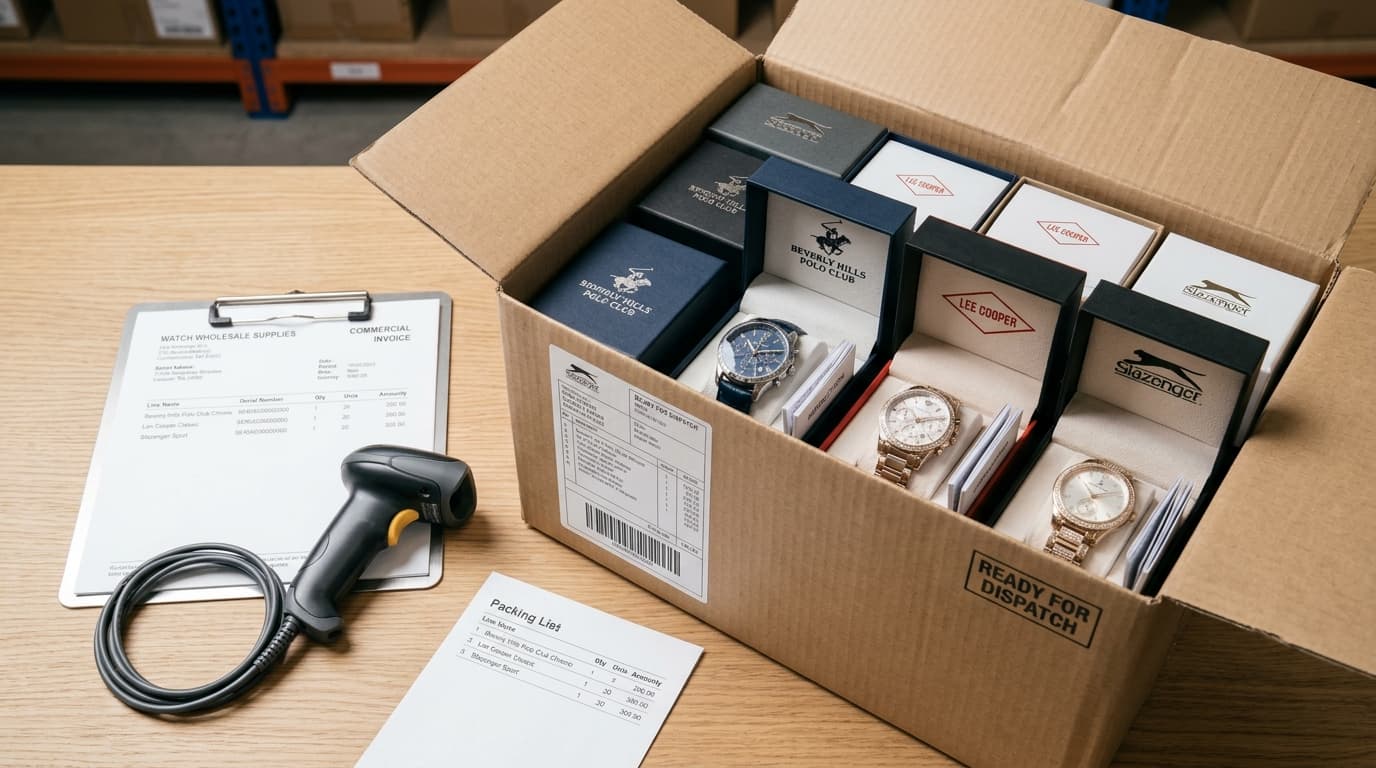
11. What evidence is provided when an order is packed and dispatched?
Once payment has been made, buyers need to know whether the supplier can demonstrate that the correct products were prepared and handed over for shipping.
This becomes particularly important for larger orders containing multiple models or different quantities. Proper dispatch records help resolve disagreements involving missing items, incorrect references and shipping claims.
A good answer: The supplier provides an itemized packing list, shipment tracking details and appropriate dispatch evidence. For larger orders, this may include photographs, packing records or other documentation showing the products prepared for shipment.
A bad answer: The supplier provides no packing documentation, refuses to confirm shipment details or cannot explain discrepancies between the original order and the dispatched goods.
A tracking number alone does not establish that the correct watches were packed. Buyers should retain the quotation, invoice, approved order details, packing list and shipping records together.
12. What happens when a regularly purchased model becomes unavailable or discontinued?
Wholesale businesses need a degree of supply continuity, especially when they advertise specific models or build their sales campaigns around particular products.
A supplier may have genuine stock available today but be unable to replenish it later. This is not necessarily a sign of an unreliable business, particularly when dealing with discontinued or limited-availability watches. The important issue is whether availability is communicated honestly.
A good answer: The supplier distinguishes between available stock, limited quantities, discontinued products and items that can potentially be reordered. It provides realistic replenishment information and agrees not to substitute models without approval.
A bad answer: The supplier repeatedly confirms availability without being able to fulfil orders, promises unlimited replenishment of discontinued models or replaces unavailable products without informing the buyer.
Retailers should avoid making long-term advertising or customer delivery promises based on stock that has not been confirmed.
Recognising Warning Signs Before Placing an Order
The answers to the 12 questions should be considered together. One incomplete document or an unusual commercial arrangement does not automatically establish that a supplier is dishonest. However, several inconsistencies may indicate that further verification is necessary.
Pay particular attention to the following warning signs:
- Unverifiable authorization claims: A supplier claims to be an official dealer or distributor but cannot substantiate the relationship.
- Unclear product references: The supplier avoids giving complete model numbers or provides descriptions that do not match the actual products.
- Unexplained pricing: Prices are substantially below comparable market offers, with no reasonable explanation of the stock's condition, origin or commercial circumstances.
- Unusual payment arrangements: The supplier requests transfers to unrelated individuals or frequently changes bank details without proper verification.
- Incomplete invoices: The supplier refuses to issue a formal invoice or provides documents that do not identify the products and parties involved.
- Unclear warranty promises: Manufacturer warranty coverage is advertised without establishing eligibility.
- Pressure to pay immediately: The supplier discourages reasonable checks or insists that verification must be skipped to secure a deal.
- Unclear delivery responsibilities: The supplier cannot explain who handles customs clearance, import charges or shipping claims.
The important principle is to investigate inconsistencies before they become expensive problems. A professional supplier should be willing to explain its products and commercial arrangements.
A Practical Supplier Approval Process
Before placing a significant wholesale order, buyers should document their findings rather than rely on informal conversations.
A straightforward approval process can be divided into three stages.
1. Verify the supplier
Confirm the legal business identity, invoicing details, business background and payment arrangements. Establish whether the supplier is an authorized dealer, grey-market operator or independent wholesaler.
2. Verify the products and commercial terms
Check the complete model references, product condition, available provenance evidence, wholesale prices, warranty arrangements and delivery responsibilities.
3. Approve the first order
Where practical, begin with a smaller order or sample purchase. Inspect the watches, accessories, packaging and documentation against the agreed specifications. Record any discrepancies before considering larger repeat purchases.
This process helps retailers make decisions based on evidence rather than attractive prices or sales promises.
Download the WOD Buyer's Verification Sheet
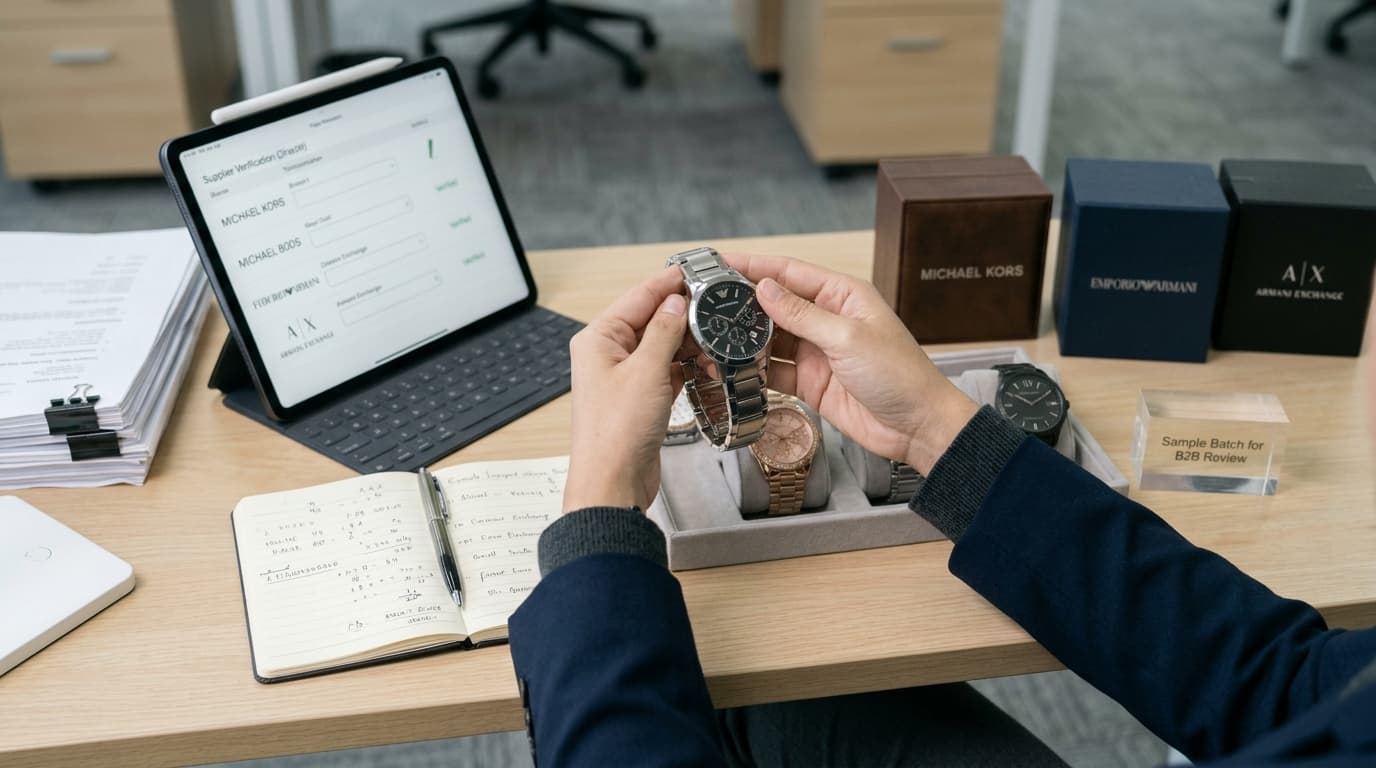
Asking the right questions is only the first step. Buyers should also keep a written record of supplier responses, supporting documents and outstanding concerns before approving a wholesale relationship.
The WOD Buyer's Verification Sheet provides a practical way to document this process. It includes all 12 supplier checks, evidence fields, review statuses and a final approval section.
Use it to compare potential suppliers, identify missing documentation and record the reasons behind your purchasing decision.
Download the WOD Buyer's Verification Sheet (PDF)
The worksheet is designed to support supplier evaluation and can be completed before approving a new wholesale partner or placing a significant order.
Request a Wholesale Price List from Watches of Dubai
Looking for a wholesale supplier of genuine branded watches? Watches of Dubai works with retailers, ecommerce businesses, distributors and other commercial buyers seeking branded watch stock.
Whether you are expanding an existing retail business or sourcing products for a new online store, our wholesale team can help you explore available brands, product references, quantities and pricing.
Request a Wholesale Price List from Watches of Dubai and discuss your sourcing requirements.
If you prefer to sell watches without holding inventory, you can also explore our watch dropshipping services.
For more information about the company, visit About Watches of Dubai or browse the WOD frequently asked questions.
Frequently Asked Questions
Does buying from a genuine watch wholesaler mean the supplier is an authorized dealer?
No. An independent wholesaler may legitimately supply genuine branded watches without being officially authorized by the brand. Authorized dealer status and product authenticity are separate matters. Buyers should verify both if authorized-channel sourcing is a requirement.
Are grey-market watches counterfeit?
Not necessarily. Grey-market watches can be genuine products sold outside the brand's authorized distribution network. However, buyers should investigate their sourcing, warranty eligibility, condition and available documentation before purchasing.
What should a proper wholesale watch invoice contain?
A commercial invoice should identify the seller and buyer, invoice number, date, watch brands and model references, quantities, unit prices, currency, total value and agreed payment terms. International shipments may also require country-of-origin and customs classification information.
Should I pay a watch wholesaler through a personal bank account?
Generally, payments should be made to an account that can be reasonably verified as belonging to the invoicing business. If a supplier uses a third-party payment arrangement, request written documentation explaining the relationship and independently verify the instructions before transferring funds.
Who pays customs duties when importing wholesale watches?
It depends on the agreed delivery terms and applicable import regulations. Under DAP, for example, the buyer generally handles import clearance and duties. Under DDP, the seller generally assumes these responsibilities. Always confirm the named delivery location, importer-of-record arrangements and destination-country requirements before paying.
Should I inspect a sample before placing a wholesale order?
Where practical, yes. A sample allows buyers to assess the watch's condition, model reference, presentation, included accessories and consistency with the supplier's description. It is particularly useful before committing to a large order or establishing a long-term supply relationship.
Does every genuine branded watch include an international manufacturer warranty?
No. Warranty coverage varies by brand, model, purchase channel and destination. Some products may have manufacturer-backed coverage, while others may rely on supplier or retailer warranties. Buyers should verify the actual terms before making promises to customers.
Sources and Further Reading
The following independent resources provide additional guidance on brand authorization, international trade terms, watch classification and import documentation.
- Rolex – Official Store Locator
Rolex's official retail locator helps buyers identify authorized points of sale. It is a useful example of why authorization claims should be checked directly with the relevant manufacturer. - International Chamber of Commerce – Incoterms 2020
The ICC provides the internationally recognized framework for understanding the allocation of costs, risks and responsibilities between buyers and sellers in international trade. - World Customs Organization – Harmonized System
The WCO explains the Harmonized System used to classify traded goods. Chapter 91 covers clocks, watches and their parts. - Watches of Dubai – Wholesale Services
Information about branded watch wholesale sourcing, available brands, commercial quantities and wholesale enquiries.
Methodology and Editorial Limitations
This guide is an original commercial procurement resource developed around supplier due diligence, product provenance, payment security and international wholesale considerations. It is intended to help buyers evaluate potential suppliers, not to provide an authentication certification, legal opinion or customs classification determination.
Import duties, taxes, documentation and warranty rights vary according to the relevant jurisdictions, brands and transaction terms. Buyers should verify current requirements with the relevant authorities and manufacturers before making purchasing decisions.


